


My relationship with the grocery store has changed dramatically since becoming a parent.
I used to approach shopping as part obligation, part scavenger hunt for fun-looking treats. Now, with a 20-month-old in tow, my relationship with the grocery store has taken on a more… adversarial posture. As I walk through the aisles, I’m always wondering how many of those items shouting at me from the shelves are genuinely good vs. selling me a bill of goods.
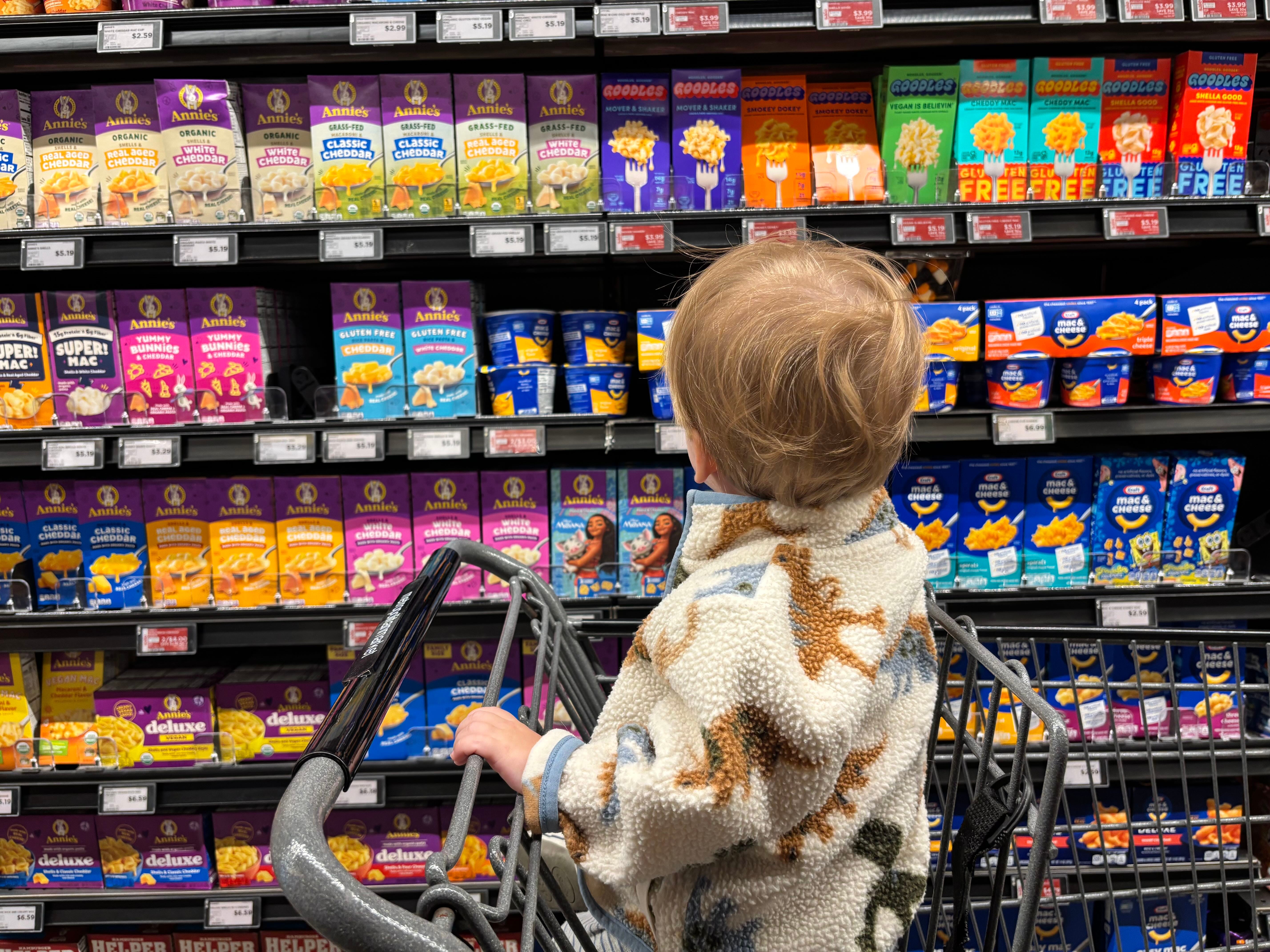
As a strategist, I’m acutely aware of how design affects consumer choice. As a parent, I’m experiencing that reality more intensely than ever. I can only imagine how pronounced this sense of being at war with each aisle will become when my little boy starts pointing at products from the comfort of his shopping cart perch and demanding I buy them—or, scarier yet, when he starts recognizing his favorite characters on the boxes of what always tend to be least-healthy options in any aisle. (Side note: the use of characters to target children is so effective it’s banned in some countries, including Mexico under their Food Labeling and Advertising Law.)
It’s not just the products themselves putting me on high alert. The grocery store can be weirdly intimate—a place where your community gets to peek directly into your habits and lifestyle. Sometimes I feel like every shopper has a pair of binoculars pointed right at my open pantry, and that whatever I put in my cart becomes a referendum on myself and my choices as a parent.
Maybe this all sounds a bit dramatic, but we know from research that parents really do carry the weight of other shoppers’ expectations as they stroll the aisles. Recent parent interviews I facilitated for a multivitamin brand even revealed that moms will often hide less healthy items in their carts while keeping healthier options up front in the open.
That pressure to reach for the organic bone broth that’s four bucks more than the store brand? It’s all part of an internal struggle to do right by our families that follows us as we check items off our list.
This is in part just being a parent, but I also think my industry has a responsibility to understand and respect the tradeoffs that consumers are making every day: between healthy choices and realistic budgets, between kids getting a win and parents feeling good about what they’re putting on the table.
The truth is, I’m not always buying the premium/organic/feel-good option, because we don’t have an infinite grocery budget. Sometimes, my kid is going to get the treat he’s been frantically pointing at from the shopping cart. These are tradeoffs I and many parents like me are willing to accept, and it’s the job of brand builders to respect these tradeoffs in their work.
What does that mean in practice? Well, I’m still figuring it out. What I know is this: parents are smart, and we can spot the difference between being appeased and actually being understood. The brands that invest the time in understanding parents will earn our trust.